MSME Bill provisions take centre stage as the Rajya Sabha has passed the Micro, Small and Medium Enterprises Development (Amendment) Bill 2026. The Bill further amends the Micro, Small and Medium Enterprises Development Act, 2006. It aims to address payment delays and simplify dispute resolution.
The MSME Bill states that every central public sector enterprise must settle all invoices for procurement of goods or services from MSMEs on the Trade Receivables Discounting System. This measure seeks to reduce delays in payments to micro, small and medium enterprises. The Bill also covers cases where payments remain unpaid for longer periods. If a case has been pending for more than six months, at least 50 per cent of the awarded amount must be paid to the supplier. These rules form the core of the changes introduced by the MSME Bill.
Under the MSME Bill, if mediation fails in a dispute, the reference for arbitration must be made within 30 days from the date of termination of mediation. An award must then be made within 90 days from the date of completion of pleadings. These fixed periods are meant to make the process faster and clearer for both suppliers and buyers. The MSME Bill keeps the focus on practical steps that reduce waiting time for enterprises waiting for dues.
Credit Growth for the MSME Sector
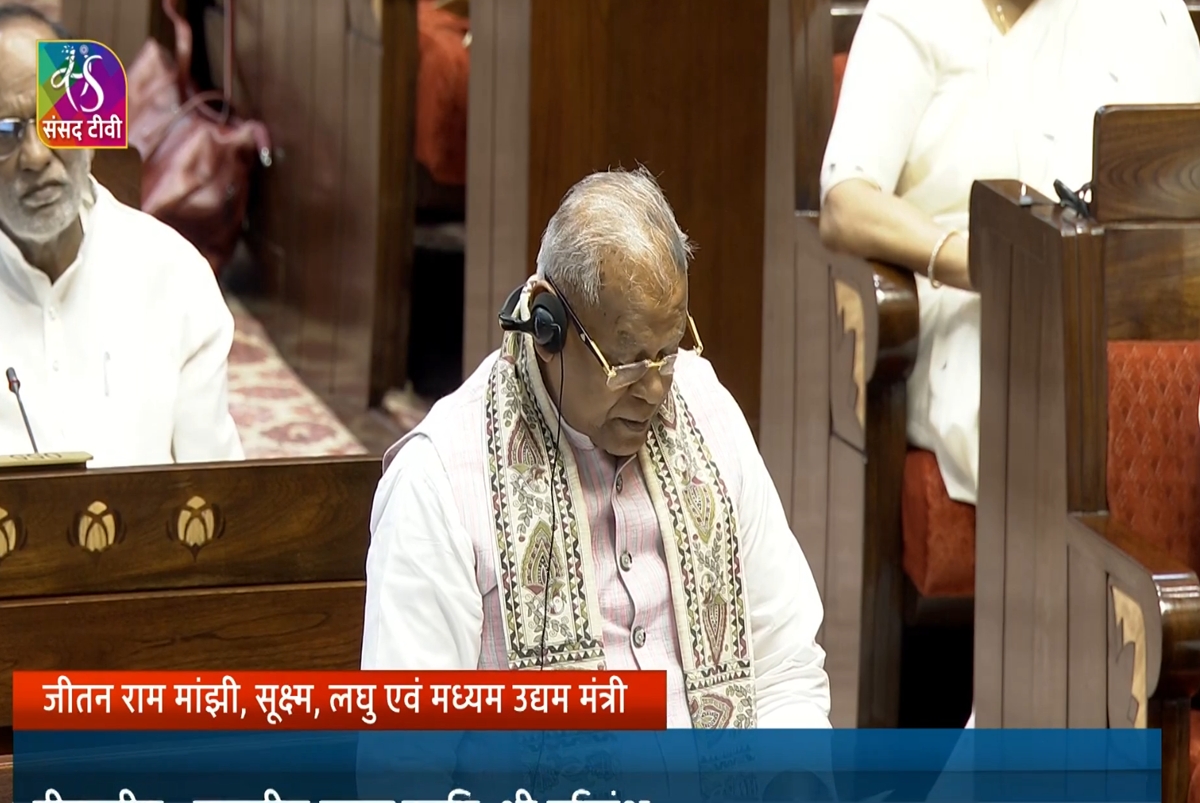
When the House met after the first adjournment at 2:00 PM, Minister of Micro, Small and Medium Enterprises Jitan Ram Manjhi moved the Bill. Replying to the debate, Mr Manjhi said the outstanding credit extended to the MSME sector has witnessed a significant increase in recent years. The credit, which stood at around 10 lakh crore rupees in 2014-15, has now risen to over 38 lakh crore rupees. He stated that this reflects continuous increase in credit flow to the MSME sector. The Minister added that the government is committed to strengthening the MSME sector, enhancing its growth potential, and promoting business expansion.
Credit Guarantee Support
Highlighting the role of the Credit Guarantee Fund Trust for Micro and Small Enterprises, the Minister said that the total credit guarantee extended to MSMEs between 2000 and 2022 was about three lakh 14 thousand crore rupees. In the last four years, from 2022-23 to 2025-26, this amount has surged to more than 10 lakh 47 thousand crore rupees. These figures were shared during the discussion on the MSME Bill to show the scale of support already given.
Views Shared During the Debate
Sumitra Balmik of BJP said that Prime Minister Narendra Modi has worked for the welfare and empowerment of women, Scheduled Castes, Scheduled Tribes and the last person standing in the queue. She stated that prior to 2014, development largely remained confined to paperwork but under the leadership of Prime Minister Modi the country has witnessed significant transformation. She added that the government’s focus is on bringing real change in society, promoting self-reliance, and empowering citizens. Ms Balmik said that this Bill has been brought with the objective of uplifting the poor and ensuring their meaningful integration into the nation’s growth and development.
Dola Sen of TMC said MSMEs are the backbone of the country’s economy. She said the manufacturing sector alone contributes to 17 per cent of the nation’s GDP and MSMEs can address the country’s unemployment issue. Ms Sen alleged that the Government is not taking initiative to protect the MSME sector. Santrupt Misra of BJD said the MSME sector contributes to 36 per cent of GDP and it is giving employment to around 30 crore people. He expressed concern that funds of around 8 to 10 lakh crore rupees of the MSME sector are stuck in the pipeline. Mr Misra stressed for concrete reforms rather than cosmetic solutions. Golla Baburao of YSRCP, M Thambidurai of AIADMK, Rajendra Jain of NCP, Masthan Rao Yadav Beedha of TDP, Ravi Chandra Vaddiraju of BRS, Pramod Boro of UPPL, and Ramji of BSP also participated in the discussion among others.
Indian-Origin NASA Astronaut Anil Menon Blasts Off to ISS in Historic Mission
After passing the Bill, the Rajya Sabha was adjourned for the day to meet again at 11:00 AM tomorrow. The MSME Bill now moves forward as part of the legislative process. Micro, small and medium enterprises can expect clearer rules on invoice settlement through the Trade Receivables Discounting System. Disputes that go to mediation and arbitration will follow the 30-day and 90-day timelines set out in the Bill.
In cases pending beyond six months, suppliers are to receive at least 50 per cent of the awarded amount. These steps are intended to improve cash flow and reduce uncertainty for enterprises that supply goods or services to central public sector enterprises. The Minister’s statements on rising credit and guarantee cover were presented as evidence of continued support for the sector. Members from different parties placed on record both support for the objectives and concerns about the scale of pending dues. The MSME Bill keeps the focus on payment timelines, dispute processes and the existing credit support framework. Enterprises waiting for payments will watch how the new provisions are put into practice once the Bill completes its full legislative path.